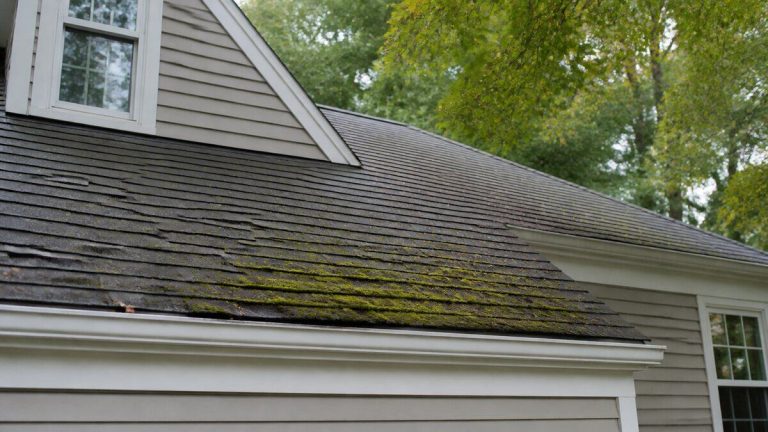

Have the roof inspected before cleaning moss on roof shingles if you see lifted edges, damaged shingles, or signs of a leak. Start with photos taken from the ground. If you cannot tell whether the shingles beneath the growth are intact, ask a roofer to evaluate their condition before choosing a cleaning method.
For a home in Bellingham, Franklin, or elsewhere in Massachusetts, the useful starting point is the affected roof slope, not simply the amount of green on it. A shaded patch beneath a tree, growth below an upper downspout, and growth beside visibly curled shingles give a contractor different questions to investigate.
The Asphalt Roofing Manufacturers Association’s guidance on algae and moss distinguishes dark algae discoloration from moss, which needs moisture and favors shaded roof areas. Raised or matted growth is a useful clue, but a ground-level photo cannot establish what is happening underneath it.
Take one wide photo showing the whole slope and a closer image using your camera’s zoom. Include a fixed landmark, such as a chimney or dormer, so the contractor can locate the patch. Do not climb onto the roof to lift shingles or scrape away growth for a better picture.
| What you can observe | What to document | First step |
|---|---|---|
| Flat dark streaks without visible raised growth | Which slopes are affected and whether shingle edges appear flat | Confirm the roof material and its manufacturer’s cleaning guidance; request an inspection if its condition is uncertain |
| Raised green growth with edges that appear flat | Wide and closer photos, approximate coverage, and any previous treatment | Ask whether the covering beneath the growth needs inspection before cleaning |
| Lifted, curled, loose, or displaced shingles near growth | The exact location and any change noticed after wind or rain | Arrange a roof inspection and repair evaluation before cleaning |
| An interior stain, active dripping, or moisture noticed in the attic | When it appeared, recent weather, and the room affected | Request a prompt inspection; do not assume moss explains the moisture |
| Growth near recurring debris, gutter overflow, or upper-roof discharge | The growth and the nearby drainage or debris pattern in the same photo | Confirm roof condition, then identify any separate gutter, drainage, or tree work |
When the view is unclear, record “condition not visible” rather than “shingles are sound.” That distinction helps a contractor plan the inspection without turning an incomplete photo into a diagnosis.
ARMA explains that moss can lift or curl shingle edges, increasing their vulnerability to wind. Severe buildup can also redirect water laterally and contribute to deck damage or leaks. Removing visible growth does not, by itself, establish that the roof is serviceable.
Ask the roofer to distinguish observed damage from areas that could not be assessed. A useful inspection record should answer:
Request location-labeled photos with the findings. “Damaged shingles beside the rear dormer” is more useful when comparing proposals than a general recommendation to “address the moss.”
ARMA warns that pressure washing can strip protective granules and cause premature roof-system failure. Confirm the exact roof material and follow its manufacturer’s current cleaning instructions instead of assuming a method advertised for another roof is suitable.
Before accepting a cleaning proposal, ask the provider to identify the intended method, the applicable manufacturer guidance, and how it will protect landscaping and handle runoff. Ask what happens if damaged shingles are discovered during the work. Keep roof access and treatment with a qualified provider; do not improvise a chemical mixture or scrape the shingles to test a patch.
ARMA identifies shade and debris from overhanging branches as conditions that favor moss. Its prevention guidance also addresses gutter drainage and upper downspouts that discharge onto lower roof areas.
From a safe ground-level position, collect one condition record to share with each provider:
If you have photos from both leaf-on and leaf-off seasons, include them. There is no need to wait for another season before reporting damage or a leak.
A cleaning quote should not be mistaken for a repair assessment. Ask each provider to state what is included, what is excluded, and whether its work depends on another trade finishing first.
If you see damaged or lifted shingles, or need the source of a leak investigated, contact Roof Experts for a roof inspection. When a roof defect is confirmed, its roof repair service can address the roofing work. Confirm cleaning and tree-work arrangements separately with the appropriate provider.
Before authorizing cleaning, you should know whether repair comes first, which method is appropriate for your roof, and who is responsible for each part of the work.
Roof Installations

Roof Replacements
Roof Repairs