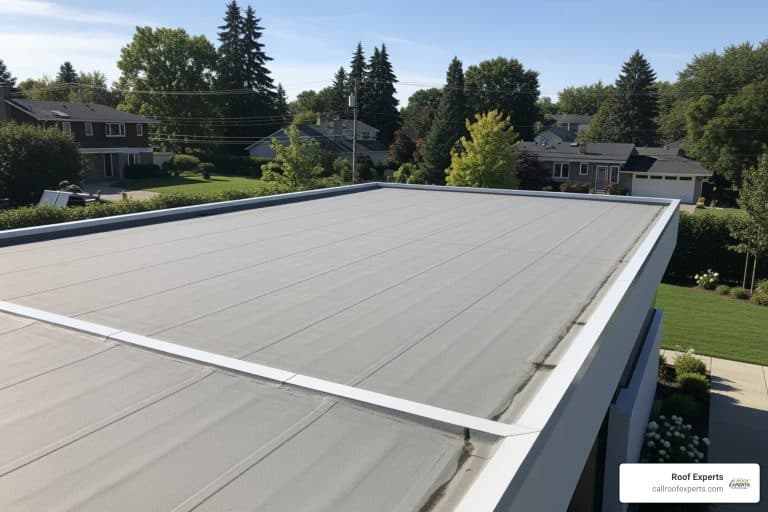

A concrete flat roof is one of the most durable roofing systems available — and one of the most misunderstood.
Quick answer: Here’s what you need to know at a glance:
| Feature | Concrete Flat Roof |
|---|---|
| Lifespan | 50–60 years with proper maintenance |
| Cost | $5–$10 per square foot installed |
| Weight | 100–150 lbs per cubic foot |
| Fire rating | Class A (non-combustible) |
| Energy savings | Up to 20% with reflective coatings |
| Best for | Durability, rooftop use, long-term ROI |
A concrete flat roof is a horizontal or nearly horizontal roof deck built from reinforced concrete — either poured on-site or assembled from precast sections. Unlike asphalt shingles or TPO membranes, it acts as a structural element of the building itself, not just a surface layer.
That combination of strength and function is why roughly 85% of flat roofs in urban areas are made of reinforced concrete.
But concrete roofing also comes with real trade-offs — weight loads, drainage demands, and higher upfront costs — that every homeowner should understand before making a decision.
This guide breaks all of it down in plain language.
I’m Jason Hedtler, owner of Roof Experts LLC in Bellingham, MA, and I’ve spent years helping Massachusetts homeowners navigate the real-world demands of concrete flat roof systems — from structural assessments to waterproofing and long-term care. Whether you’re dealing with an aging roof or planning a new build, understanding what’s above your head is the first step to protecting what’s below it.

Quick concrete flat roof terms:
When we talk about a concrete flat roof, we aren’t just talking about a thick slab of stone. It is a sophisticated assembly designed to handle pressure while keeping the elements out.

There are two primary ways these roofs are built. Cast-in-place concrete involves formwork, steel rebar, and poured concrete to create a seamless slab. Precast slabs are made off-site and lifted into place, often using steel joists and grout to lock components together.
For a deeper dive into how these systems stack up against other options, check out this Reinforced Concrete Flat Roof: A Comprehensive Guide for the United States – New England Metal Roof.
One of the biggest perks of concrete is its thermal mass. It absorbs heat slowly during the day and releases it at night, which can help regulate indoor temperatures. It also has a Class A fire rating, meaning it is non-combustible and won’t spread flames.
Building a concrete flat roof requires strict adherence to standards like ACI 318 and the International Building Code (IBC).
Modern engineering has introduced ways to improve these roofs:
If you are curious about the mechanics of the build, How to Build a Flat Concrete Roof | DoItYourself.com offers a look at the joist and slab method. Concrete may be walkable in 48 hours, but it generally takes 28 days to reach full structural strength.
A concrete flat roof is built for the long haul. According to the National Roofing Contractors Association (NRCA), a well-maintained concrete slab can last 50 to 60 years.
Reflective “cool roof” coatings can reflect a large share of UV rays, and studies from the U.S. Department of Energy show they can reduce energy bills by up to 20%.
For more on how to plan these features, see our guide on Designing Your Dream Flat Roof A Comprehensive Overview. These roofs are also designed to handle strong wind uplift, an important feature in exposed coastal areas.
Concrete is heavy. A typical slab weighs between 100 and 150 lbs per cubic foot, so the building must be engineered to handle the load. If you’re considering a concrete roof for an existing home, a structural engineer is essential.
Drainage is the other key issue. To prevent ponding, the roof should have a minimum slope of 2%.
We achieve this through:
Even though concrete is tough, it isn’t invincible. It is naturally porous, so a high-quality waterproofing membrane is essential.

We often use liquid-applied systems like silicone or polyurethane because they create a seamless barrier over the concrete. Other options include EPDM or TPO sheets. Before installation, proper surface prep may include cleaning the concrete and sealing cracks wider than 1/8 inch. If you’re wondering about the investment, you can check the Average Cost Of Flat Roof Replacement for context on different systems.
Neglect is one of the biggest causes of flat roof problems. We recommend bi-annual inspections—once in spring and once in fall.
Our maintenance checklist includes:
Regular inspections help catch issues early. You can learn more about our process at Commercial Roof Inspections.
One of the biggest advantages of a concrete flat roof is its versatility. Because it is so strong, it can support:
In urban settings, these roofs can also function as blue roofs for water retention and stormwater management.
If you’re in Bellingham, MA, or nearby communities, a concrete flat roof typically costs between $5 and $10 per square foot installed. While the upfront price may be higher than some alternatives, the long lifespan and energy savings can improve long-term value.

When you work with Roof Experts, we bring over 20 years of experience to the table. We ensure the full system—from structural reinforcement to waterproofing—is built to last. We always recommend consulting with a structural engineer and confirming code compliance before starting.
If you are ready to explore your options, you can find Flat Roofers In My Area or read More info about concrete roofing materials to see which system fits your lifestyle and budget.
A concrete flat roof is more than just a covering; it’s a long-term investment in durability and versatility.
Roof Installations
Roof Replacements
Roof Repairs