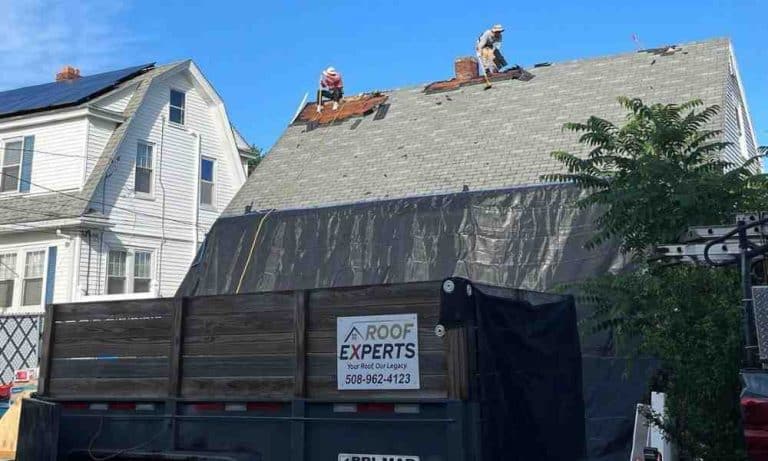

Emergency roof tarps are your first line of defense when storm damage leaves your home exposed to the elements. Here are the best options for immediate leak protection:
| Tarp Type | Best For | Lifespan | Relative Cost |
|---|---|---|---|
| Polyethylene (6-12 mil) | Most residential damage | 30-90 days | $ |
| Vinyl (18-22 mil) | Extended coverage needs | Up to 6 months | $$ |
| FEMA-grade poly | Large-scale storm events | 12-18 months | $$$ |
| Heat-shrink film | Professional rapid response | 6+ months | $$$$ |
| Upcycled billboard vinyl | Eco-conscious patching | 30-90 days | $$ |
Storms caused $165 billion in damages across the U.S. in 2022 alone. Water damage is the second most common homeowner insurance claim — roughly 1 in every 4 claims filed. When a storm tears off shingles or a falling branch punches through your roof deck, you need a solution fast — before the next rain event turns a manageable repair into a gut-wrenching disaster.
The problem is that not all tarps are equal. A standard blue tarp from a hardware store behaves very differently from a professional-grade, UV-stabilized, fire-retardant cover engineered for rooftop use. Choosing the wrong one — or installing it incorrectly — can make a bad situation worse.
This guide cuts through the noise so Massachusetts homeowners can make a smart, fast decision.
I’m Jason Hedtler, owner of Roof Experts LLC in Bellingham, MA, with years of hands-on experience helping homeowners respond quickly and correctly to roof damage using emergency roof tarps. In this roundup, I’ll walk you through the best options on the market so you can protect your home with confidence right now.

Essential emergency roof tarps terms:

Selecting the right emergency roof tarps isn’t just about grabbing the first blue sheet you see at the local hardware store in Bellingham or Franklin. In April 2026, we are seeing increasingly unpredictable spring storms that demand higher-quality materials. The “best” tarp depends entirely on the extent of your damage and how long you expect to wait for a permanent leaking roof repair service.
Material durability is measured by its ability to withstand wind, rain, and the sun’s harsh rays. If a tarp is too thin, it will flap in the wind, eventually shredding or pulling its fasteners right through the material. This is why we look at tear strength and waterproofing as the two most critical metrics.
| Feature | Polyethylene (Standard) | Vinyl (Heavy Duty) | Heat-Shrink (Professional) |
|---|---|---|---|
| Thickness | 6–12 mil | 18–22 mil | 10–12 mil (Shrinkable) |
| UV Resistance | 30–90 days | 6+ months | 6–12 months |
| Tear Strength | 80–120 lbs | 300+ lbs | High (Tight Fit) |
| Best Use | Small leaks/Short term | Large holes/Long term | Total structural breach |
When you’re browsing for a complete guide to protect your home fast, you’ll find that polyethylene (poly) is the most common choice. These are lightweight and easy to handle, which is a major plus if you’re trying to secure a roof before a Nor’easter hits. For standard residential damage, a 6–12 mil poly tarp is the baseline. Anything thinner than 6 mil is likely to fail within a week.
However, if your roof has sustained significant structural damage—perhaps from a fallen limb in Norfolk County—you should consider vinyl. Vinyl tarps are significantly heavier (often 18–22 mil) and offer superior UV resistance and fire retardancy. While a poly tarp might start to degrade and become brittle after 30 days of sun exposure, a high-quality vinyl tarp can remain effective for up to six months. This is crucial if your roof repairs are delayed due to high contractor demand following a major storm.
For homeowners looking for the ultimate in “set it and forget it” temporary protection, heat-shrink film (often referred to by brands like Stormseal) is a game-changer. Unlike traditional emergency roof tarps that rely on weight and fasteners to stay down, heat-shrink film is tailored on-site and then heated to shrink tightly around the roofline. This eliminates the “flapping” sound that keeps many homeowners awake at night and prevents water from pooling in low spots.
Another innovative option we’ve seen gaining traction is upcycled billboard vinyl. Organizations like Every Shelter have repurposed over 150 tons of PVC billboard material into high-quality emergency tarp services. These tarps are incredibly durable because they were originally designed to withstand high winds on highways. They often feature a nylon ripstop scrim, meaning even if the material is punctured, the tear won’t spread. Since 2020, these sustainable solutions have served over 15,000 survivors of natural disasters, proving that “recycled” doesn’t mean “weak.”
When evaluating any tarp, look for the “Denier” rating—this refers to the fiber thickness of the weave. A 1000 Denier tarp is a professional-grade standard that offers excellent durability. You also want to ensure the tarp has reinforced grommets. In our experience across Stoughton and Taunton, grommets are often the first point of failure; if they aren’t reinforced, the wind will simply rip them out of the fabric.
UV protection is equally vital. The sun’s rays break down plastic polymers. A tarp without UV stabilizers will become “crispy” and eventually develop micro-cracks that allow water to seep through, defeating the entire purpose of the roof leak repair. Always check the product specs for a UV-rated lifespan of at least 30–90 days.
Installing emergency roof tarps is a high-stakes job. If it’s done poorly, the tarp will blow off in the next gust of wind, potentially causing more damage to your shingles or siding. If it’s done correctly, it buys you the time you need to work with your insurance company and schedule a permanent fix.
Professional crews don’t just “nail down” a tarp. We use a method called “perimeter attachment” using 2×4 or 1×4 wood furring strips. By wrapping the edges of the tarp around these boards before screwing them into the roof deck, we create a much stronger anchor point that distributes the wind load evenly.

If you are attempting a DIY installation—which we only recommend for small, low-slope areas—following a strict emergency roof tarping guide is essential for success.
For more detailed technical steps, you can consult this guide on how to tarp a damaged roof.
We cannot stress this enough: your safety is worth more than your roof. Every year, thousands of injuries occur from falls off residential roofs. Before you even think about climbing a ladder in Attleboro or Bridgewater, ask yourself these questions:
If the damage is extensive, involves the roof ridge, or requires multi-story access, it is time to call for emergency roof repair. Professionals have OSHA-approved harnesses and fall-arrest systems that make the job significantly safer.
One of the biggest misconceptions homeowners have is that they should wait for an insurance adjuster before tarping. This is actually incorrect. Most policies have a “mitigation of damages” clause, which requires you to take reasonable steps to prevent further damage. Installing emergency roof tarps is considered a primary mitigation step.
When you work with a professional emergency roof tarping service, the costs typically range from $200 to $1,000 depending on the size and complexity of the job. While DIY materials might only cost you $150–$350, the professional invoice is often fully reimbursable by your insurance company as part of your claim.
Pro Tip for Insurance:
In states like Virginia, wind/hail deductibles can be 1–5% of the insured value, but here in Massachusetts, your standard deductible usually applies. Regardless of the cost, documenting the process is the key to a smooth roof repair service claim.
Whether you are in Ashland, Canton, or Milford, the goal of an emergency tarp is to buy you peace of mind. A high-quality emergency roof tarp isn’t a permanent fix, but it is the bridge that gets you from a disaster to a restored home.
By choosing the right material—like a heavy-duty 12 mil poly or a 22 mil vinyl—and ensuring it is anchored with wood strips rather than just bricks or sandbags, you can rest easy knowing your interior is protected.
If the job looks too big or the roof looks too steep, don’t risk a fall. Roof Experts is here to provide 24/7 support for homeowners across Norfolk and Plymouth County. We’ve spent over 20 years perfecting the art of storm response, ensuring that when the clouds break, your home stays dry.
For immediate assistance with your roof, explore our emergency roof tarping services today.
Roof Installations
Roof Replacements
Roof Repairs