Why Your Attic’s Health Matters More Than You Think
An attic ventilation inspection is a systematic check of your attic’s airflow system. Proper ventilation is crucial for controlling temperatures, preventing moisture buildup, and protecting your roof from premature damage. Most homeowners don’t think about their attic until something goes wrong, but a faulty system can lead to mold, ice dams, and high energy bills.
Every day, activities like cooking and showering release gallons of water vapor into your home. Without a path to escape, this moisture gets trapped in the attic, condensing on cool surfaces, soaking insulation, and creating a breeding ground for wood rot. In summer, an unventilated attic can exceed 150°F, baking your shingles from below and forcing your AC to work overtime. In winter, escaping heat melts snow on the roof, which refreezes at the eaves into destructive ice dams.
As Jason Hedtler, owner of Roof Experts LLC in Bellingham, MA, I’ve seen how a thorough attic ventilation inspection catches small issues before they become expensive disasters. With years of hands-on roofing experience across Massachusetts, I’ve helped countless homeowners understand that protecting their homes starts with what’s happening in the space they rarely see.
Ensuring proper airflow with an attic ventilation inspection yields significant benefits:
Lower Energy Costs: A cooler attic reduces the heat radiating into your home, easing the load on your air conditioner.
Increased Roof Longevity: Proper ventilation prevents the premature aging, curling, and cracking of shingles caused by excessive heat.
Moisture and Mold Prevention: Consistent airflow removes humidity, protecting your home’s structural integrity and your family’s health by preventing mold and wood rot.
Ice Dam Prevention: A well-ventilated attic keeps the roof deck cold, preventing snow from melting and refreezing into damaging ice dams at the eaves.
Warranty Protection: Many roofing manufacturers require adequate attic ventilation to keep your shingle warranty valid.
Your Comprehensive Attic Ventilation Inspection Checklist
Ready to peek into your attic’s world? An attic ventilation inspection doesn’t have to be daunting. A systematic approach can uncover issues that might be costing you money or compromising your home’s integrity. We’ll guide you through checking the exterior and interior, understanding your system, and interpreting the findings.
Step 1: Gather Your Tools and Safety Gear
Safety first! Attics can be dusty and cramped. Before you start, gather:
Safety Gear: Safety glasses, a dust mask or respirator, a hard hat, and gloves.
Essential Tools: A bright flashlight or headlamp and a tape measure.
For Safety: A sturdy plywood board to lay across joists for a safe walking surface. Never walk on exposed ceiling drywall or insulation, as you risk falling through!
Optional: A thermal camera can help professionals identify air leaks or poor insulation.
Ensure you have safe access. Once inside, always walk on joists or use your plywood board. Taking photos of problem areas is also a great idea.
Step 2: Assess Vents and Look for Exterior Clues
Your attic ventilation inspection begins outside. Look for intake vents (low on the roof) and exhaust vents (high on the roof).
Common Vent Types:
Soffit Vents (Intake): Located under the eaves. Check that they are clear of debris, paint, or insulation.
Ridge Vents (Exhaust): Run along the peak of the roof. Ensure the slot in the roof deck was actually cut underneath.
Gable Vents: Found on the end walls of the house. Check for blockages or damaged screens.
Turbine or Box Vents (Exhaust): Individual vents on the roof surface. Ensure turbines spin freely and all vents are free of damage.
What to look for externally:
Blockages: Clogged vents from leaves, nests, or paint.
Pest Entry: Damaged screens or gaps are an open invitation for pests.
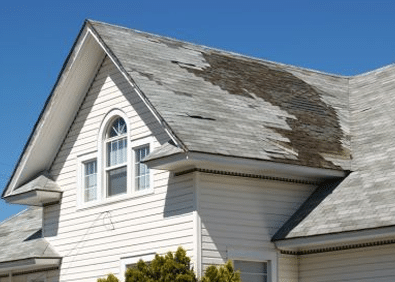
Roof Damage: Prematurely curling or cracking shingles can signal excessive attic heat.
Moisture Stains: Stains or bubbled paint on fascia boards can indicate ice dams or other moisture issues.
For more details on how natural attic ventilation works, you can visit About Attic Ventilation.
Step 3: The In-Attic Part of Your Attic Ventilation Inspection
Now, head into the attic itself. This is where you’ll find the most direct evidence of ventilation problems. Remember your safety gear!
Look for Moisture: This is the biggest red flag.
Mold or Mildew: Dark, discolored patches on the underside of the roof sheathing or rafters.
Rusted Nails: Nail heads protruding through the roof deck will rust in a moist environment.
Condensation or Frost: Visible water droplets or frost on cool surfaces during cold weather.
Damp Insulation: Wet or matted insulation loses its effectiveness and indicates a moisture problem.
Check for Blockages: Insulation often blocks soffit vents, cutting off crucial intake air. Look for insulation baffles (rafter vents), which are channels that should keep a clear path for air to flow from the soffits.
Inspect Exhaust Fans:Bathroom and kitchen fans must vent to the outside, never into the attic. Venting them into the attic dumps warm, moist air where it will cause condensation and mold.
Find Pest Evidence: Look for droppings, nests, or chewed wires, especially near vents.
To evaluate your attic’s health, you need to understand how ventilation should work.
System Types: Ventilation can be passive (using natural airflow like soffit and ridge vents) or active (using electric fans).
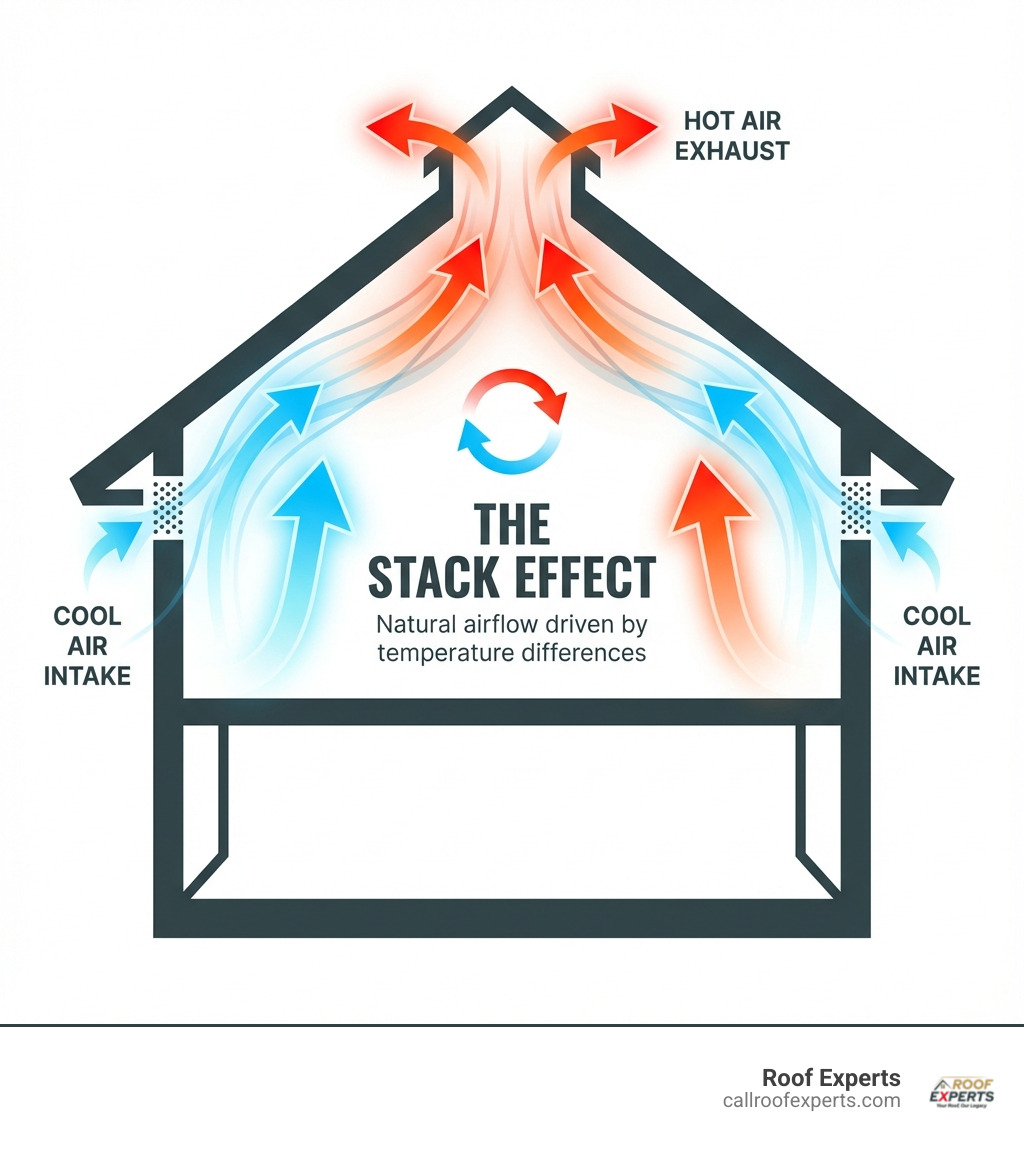
A Balanced System: The goal is a balanced system where cool, fresh air enters through low intake vents (soffits) and warm, moist air escapes through high exhaust vents (ridge). This continuous flow prevents hot spots and moisture buildup.
Ventilation Ratio (NFVA): Building codes require a minimum Net Free Ventilating Area (NFVA). The general rule is the 1/300 rule: 1 square foot of total ventilation for every 300 square feet of attic floor space, balanced evenly between intake and exhaust.
Mixing Vent Types: Avoid mixing different types of exhaust vents (e.g., a ridge vent and a gable vent). This can “short-circuit” the airflow, causing the upper vent to pull air from the closer vent instead of from the soffits, leaving large areas of the attic unventilated.
Unvented Attics: While most attics need to be vented, an unvented or “conditioned” attic is possible. This is a complex design, typically using spray foam insulation directly on the underside of the roof deck, that requires professional execution to avoid moisture problems.
Backdrafting: Powerful whole-house fans can sometimes cause backdrafting, pulling dangerous exhaust gases from furnaces or water heaters into your living space. Always ensure you have windows open when using a whole-house fan.
Interpreting Your Findings and Taking Action
After your attic ventilation inspection, you’ll have a clearer picture of your attic’s health. But what do those findings mean for your home?
Common Problems and Their Consequences
The issues found during an attic ventilation inspection can lead to significant damage:
Ice Dams: In our Massachusetts and Rhode Island climate, heat escaping into a poorly ventilated attic melts snow, which refreezes at the eaves. This forces water under shingles, causing leaks and structural damage.
High Cooling Costs: A hot, unventilated attic radiates heat into your home, forcing your AC to work harder and driving up energy bills.
Premature Roof Aging: Excessive attic heat bakes shingles from below, causing them to curl, crack, and fail long before their expected lifespan.
Moisture Damage & Mold: This is the most common consequence. Trapped moisture leads to mold on the roof sheathing, wood rot in the structure, and damp, ineffective insulation.
Pest Infestations: Gaps in vents provide easy access for rodents, birds, and insects.
When to Call a Professional for an Attic Ventilation Inspection
While a DIY inspection is a great start, some situations require professional expertise. At Roof Experts, we specialize in comprehensive attic ventilation inspections and solutions for homeowners in Bellingham, Ashland, Attleboro, and across Norfolk and Plymouth County. You should call us if you find:
Widespread Mold: Extensive mold growth requires professional remediation and indicates a serious, long-term moisture problem.
Signs of Leaks or Rot: Water stains, drips, or rotting wood in the rafters or roof deck need immediate attention from a roofing expert.
Complex Roof Designs: Homes with hip roofs or multiple dormers require a carefully designed ventilation strategy.
Unsafe or Difficult Access: If you’re uncomfortable or unable to safely inspect your attic, leave it to the pros.
You Need to Verify Code Compliance: We can assess your system against local building codes to ensure it meets the required standards for safety and performance.
Persistent Issues: If you’re still battling high energy bills or ice dams, a professional can pinpoint the underlying cause.
We bring over 20 years of experience to every attic ventilation inspection, providing high-quality workmanship and exceptional customer service. For a detailed assessment and to understand potential costs, learn more about what a professional roof inspection includes. We’re here to ensure your attic is a vital, healthy part of your home.
About Roof Experts
Superior Roofing Services
Roof Installations
We specialize in professional new roof installations tailored to meet the unique needs of each homeowner in the Bellingham, MA area. Our expert team utilizes the latest materials and techniques to ensure your new roof not only looks great but also provides superior protection for your home. With over 20 years of industry experience, we commit to excellence in every project, guaranteeing a durable and aesthetically pleasing roof that enhances the value and safety of your property. Roof Experts is dedicated to honesty, quality, and satisfaction, making us the trusted choice for roofing solutions.
Whether due to age or weather damage, Roof Experts provides reliable roof replacement services designed to restore the integrity and appearance of your home. Operating out of our base at 235 Maple St Suite 8, Bellingham, MA, our skilled roofers carefully assess your current roof to recommend the best solutions. We prioritize high-quality materials and meticulous craftsmanship to ensure your new roof stands the test of time, while maintaining our commitment to exceptional customer service. Every project is handled with care and precision.
Roof Experts understands the urgency and importance of prompt roof repairs. Serving homeowners in both Franklin and Bellingham, MA, our experienced team is equipped to handle a wide range of roof repair needs, from minor leaks to significant damage. We focus on delivering quick, effective solutions that prevent further damage and protect your home. Trust Roof Experts's two decades of expertise to provide dependable repairs that ensure your roof remains in optimal condition. Customers know they can rely on us for fast service and strong results.