
Roof leak sealant is your first line of defense against water infiltration and roof damage, especially for homeowners in Massachusetts facing harsh weather conditions. Quick solutions often include:
Selecting the right product can prevent costly repairs and prolong the life of your roof.
I’m Jason Hedtler, owner of Roof Experts, with over two decades of experience in tackling roofing challenges. My expertise with roof leak sealant ensures Massachusetts homeowners get high-quality, reliable solutions.

Roof leak sealant terms you need:
– best roof sealant for leaks
– how to fix a leaking flat roof
– roof patching
When it comes to choosing a roof leak sealant, you need to consider four key factors: water resistance, durability, ease of application, and UV reflectiveness. These elements ensure that the sealant not only stops leaks but also protects your roof in the long run.
A good sealant must form a strong moisture barrier. This prevents water seepage and protects the substrate beneath your roof. Without proper water resistance, your roof could suffer from extensive damage, leading to costly repairs. A sealant that excels in water resistance keeps your roof safe from the frequent rain and snow typical in Massachusetts.
Durability is crucial, especially in regions with extreme temperatures and harsh weather conditions. A durable sealant can withstand these challenges without chipping or cracking. High-quality sealants are designed to last, ensuring your roof remains intact and leak-free over time. This longevity is essential for long-lasting protection against the elements.
The application method of a sealant can make a big difference in its effectiveness. Sealants come in various forms:
Following the manufacturer instructions is critical to ensure a successful application and to avoid potential issues.
Exposure to UV rays can cause material deterioration over time. A sealant with good UV reflectiveness protects your roof by reflecting sunlight, thus preventing damage. This feature not only extends the life of your roof but also improves its performance by reducing heat absorption.
Choosing the right sealant based on these factors can significantly impact the longevity and effectiveness of your roof repair efforts. For Massachusetts homeowners, selecting a sealant that excels in these areas is vital for maintaining a durable and leak-free roof.
When it comes to sealing roof leaks, choosing the right sealant is crucial. Here, we dive into the top three types of roof sealants: silicone, acrylic, and polyurethane. Each has its own strengths, making them ideal for different situations.
Silicone roof sealants are often considered the best all-around option. They offer excellent waterproofing and can reflect up to 90% of UV rays. This makes them incredibly long-lasting, even under the harsh weather conditions of Massachusetts. Due to their durability and effectiveness, silicone sealants are a bit pricier. However, their long-term performance often justifies the cost, especially for homeowners looking for a reliable and lasting solution.

Acrylic sealants are another popular choice, particularly noted for their UV reflectivity. They provide a good balance between cost and performance, making them a budget-friendly option. However, they are not as resistant to prolonged standing water as silicone. This means they might not be the best choice for areas prone to heavy rain or snow. Still, for roofs that need a boost in UV protection without breaking the bank, acrylic sealants can be a solid pick.
If your home is in an area with high levels of rain and snow, polyurethane roof sealants might be your best bet. They excel in water resistance, making them perfect for wet climates. While they don’t offer the same level of UV reflectivity as silicone or acrylic, their ability to withstand water makes them invaluable in rainy or snowy conditions. Additionally, they provide a good cost vs performance ratio, offering durability without a hefty price tag.
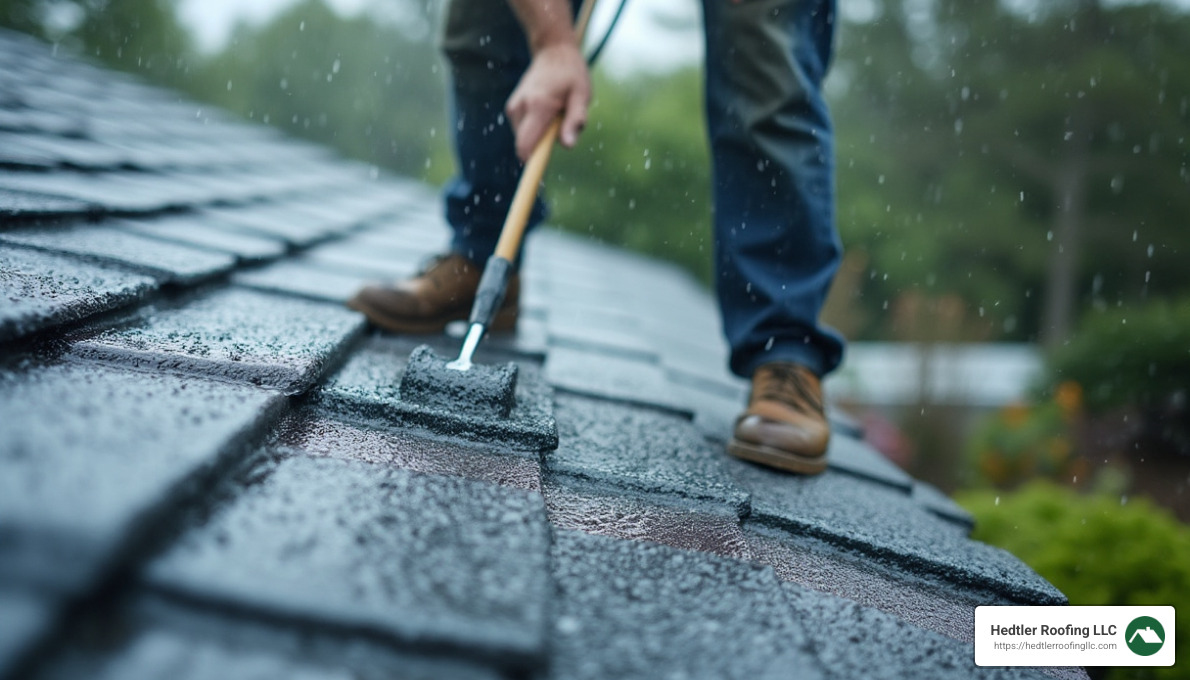
Each of these sealants serves a specific need, and selecting the right one depends on your roof’s exposure to elements like sun and water. For Massachusetts homeowners, understanding these differences is key to making an informed decision and ensuring a leak-free roof.
Applying roof leak sealant effectively is essential to ensure your roof remains leak-free and protected. Let’s explore the different methods available, each with its own set of benefits and best-use scenarios.
Tape sealants are a peel and stick solution, making them incredibly straightforward to use. They’re perfect for flat areas where you need a quick fix.
For those looking to cover a large area, paint can sealants are ideal. They allow you to control the thickness of the application, providing a robust seal.
Spray can sealants are perfect for small areas where precision isn’t as critical. They offer a simple application process but come with a limited amount of product.
When you need precision in small areas, caulk tubes are the way to go. They’re easy to apply and allow for targeted sealing.
By choosing the right application method and following these tips, you can effectively seal your roof and protect your home from leaks. Each method has its unique advantages, so select the one that best suits your specific needs and roof conditions.
When it comes to sealing a leaking roof, polyurethane, rubber, and silicone sealants are among the top choices. Each has its strengths:
Yes, roof sealant can effectively stop leaks when applied correctly. It can seal around flashings, chimneys, skylights, and walls, preventing water from seeping into your home. However, it’s crucial to identify the source of the leak first. If the leak is due to a structural issue, such as damaged shingles or improper installation, sealant alone may not be enough. Regular inspection and maintenance are key to ensuring your roof stays leak-free.
Sealing a roof leak in the rain is challenging but not impossible. Products like rubberized wet patch can be applied in hot or wet conditions, offering a temporary fix until proper repairs can be made. These products are designed to adhere even when surfaces are damp, making them useful for emergency situations. However, for a permanent solution, it’s best to wait for dry conditions to ensure the sealant bonds effectively with the roof surface, whether it’s made of asphalt shingles, tile shingles, or other materials.
In conclusion, choosing the right roof leak sealant is crucial for effective roof repair. As Massachusetts homeowners, protect your home from the harsh weather conditions typical of our region. Roof Experts is committed to providing high-quality workmanship and exceptional customer service. We understand that your roof is a significant investment, and we strive to ensure it remains in top condition.
Our team at Roof Experts offers expert guidance and solutions custom to your roofing needs. Whether you’re dealing with leaks around flashings, chimneys, or skylights, we have the expertise to recommend the best sealant for your situation. From silicone sealants with excellent UV resistance to polyurethane options for superior water resistance, we ensure your roof is well-protected and long-lasting.
Regular maintenance and timely repairs are key to extending the life of your roof. If you’re experiencing any issues or need professional advice, don’t hesitate to reach out. Our experienced team is here to assist you with all your roofing needs, ensuring your home stays safe and dry.
For more information on our services and to schedule a consultation, visit our Roof Repairs page. Let us help you keep your roof in excellent condition and provide peace of mind for you and your family.
Roof Installations

Roof Replacements
Roof Repairs